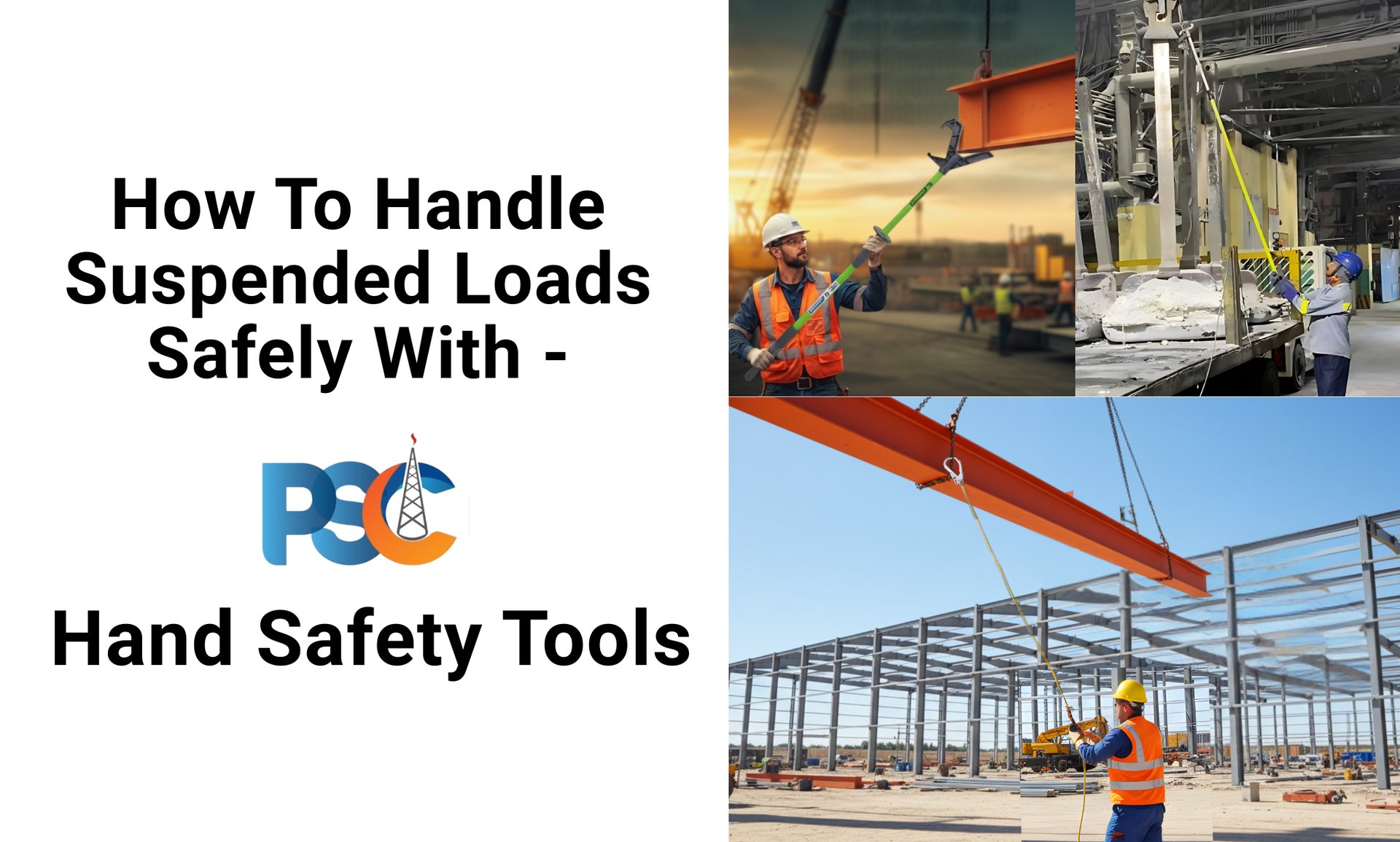
How To Handle Suspended Loads Safely With - PSC Hand Safety Tools
What is a suspended load?
A suspended load is any object that is being held up by lifting equipment and is not resting on a solid support, even if it is only a few centimeters off the ground. This includes loads held by cranes, hoists, forklifts with raised forks, excavators, telehandlers, and overhead gantries. If the lifting device fails, or the load shifts or slips, gravity will immediately take over and the load will fall, swing, or rotate.
A suspended load is not just dangerous directly underneath it; it is dangerous in any direction it can move: down, sideways, or in a swing arc. The “fall zone” is the area in which the load, or part of the load, could fall or strike a person if something goes wrong. In practice, that means the space directly under the load, plus the area where it may swing or roll if it slips, and even further out where rigging components or fragments may be thrown if they fail.
It is essential to remember that a suspended load is never “safe” just because it has been hanging for a while. Complacency sets in when people see loads hanging routinely and nothing bad happens. Bolts vibrate loose, slings cut slowly on sharp edges, hydraulic lines leak, and ground conditions change. The fact that a load has been suspended for some time does not reduce the risk; in some cases, it actually increases it.
Another key concept is that “the load” includes everything that moves with it: the object being lifted, the rigging (slings, chains, hooks, spreader bars), and sometimes attached accessories such as lifting beams, lifting lugs, and baskets. If any of these fail or detach, they can themselves become projectiles. Treat all of this as part of the suspended load, and stay clear accordingly.
Where suspended loads appear in heavy industry
Suspended loads are found in almost every heavy industry, often in routine operations that workers stop “seeing” as high risk. Understanding where they appear helps you design controls that are specific, not generic.
1.Construction and infrastructure
In construction, suspended loads appear when lifting and placing steel beams, precast concrete panels, formwork, rebar bundles, and mechanical/electrical modules. Tower cranes and mobile cranes constantly move loads above workers, tools, and materials. On high‑rise projects, loads may be moved over edges and voids, making any drop especially dangerous. Even in small projects, simple chain blocks and come‑alongs used to shift beams or equipment are creating miniature suspended‑load situations.
In civil works and infrastructure, bridge girders, deck segments, culverts, and heavy reinforcement cages are routinely lifted and positioned. Often, traffic or other workers may be present in the vicinity, which brings an added challenge: controlling public exposure to the fall zone and preventing unauthorized access beneath or near lifts.
2.Oil, gas, petrochemical and process plants
Refineries, gas plants, and petrochemical facilities handle heavy equipment such as pressure vessels, exchangers, pumps, compressors, pipe racks, and pre‑assembled skids. Many lifts occur in congested areas with narrow access, overhead lines, live process piping, and existing structures that create multiple pinch and crush points. Maintenance shutdowns (turnarounds) are particularly intense periods with many simultaneous lifts and temporary rigging operations.
On offshore platforms, suspended loads are routine during deck lifts from supply vessels, crane transfers between platforms, and internal lifting within modules. Space is limited, the sea state can cause relative movement between vessel and platform, and weather conditions are often variable. All this magnifies the need for strict fall‑zone discipline.
3.Mining, metals, and heavy manufacturing
In mining and mineral processing, suspended loads include crusher parts, mill shells, liners, large motors, structural members, and pipes. Overhead cranes in workshops and process buildings are constantly moving loads over work areas, sometimes at height where workers may not easily see or hear them. Poor lighting, dust, and noise can hide the presence of a suspended load until it is very close.
Steel mills and heavy fabrication shops move slabs, coils, plates, and formed components with overhead cranes, magnet beams, and C‑hooks. Coils can roll or topple if improperly rigged; plates can flex and “snap” as they are moved; magnets can lose power if systems fail or if surfaces are contaminated. Workers become exposed if they treat these as routine, rather than critical, movements.
4.Power generation and utilities
Power plants involve lifting turbines, generators, transformers, large valves, piping spools, and sometimes entire pre‑assembled modules. Outage periods involve many contractors working in the same area, often under schedule pressure. Lifts in turbine halls or switchyards may pass near or above energized equipment, adding electrical hazards to the suspended‑load risk.
In wind and solar projects, blades, nacelles, towers, inverters, and heavy foundation components are lifted and transported. Wind speed is a major factor: even moderate gusts can push a large surface area and cause swinging or rotating loads that are difficult to control.
5.Ports, logistics, and warehousing
Ports and terminals constantly move containers, heavy machinery, and break‑bulk cargo using ship‑to‑shore cranes, mobile harbor cranes, reach stackers, and overhead gantries. Suspended loads often travel long distances over decks, quays, and trucks. In these environments, pedestrians, drivers, and equipment operators frequently share the same space, so separation and coordination are critical.
In warehouses and logistics hubs, forklifts, stackers, and overhead cranes move pallets, coils, and equipment. Although individual loads may be smaller, the frequency of lifts and the presence of many people in narrow aisles mean that a single mistake can affect several workers.
Types of suspended loads and what makes them dangerous
Different load types behave differently when lifted. Knowing the behavior helps you predict how they might move and where they can trap or crush someone.
1.Rigid structural items
These are items like steel beams, columns, frames, platforms, and pre‑fabricated modules. They seem “solid,” but they can:
Swing like a pendulum if the crane moves or if the wind catches them.
Rotate unexpectedly if the center of gravity is not directly below the hook.
Tilt when one corner hits an obstacle or ground before the others.
The danger with rigid items is that they have hard edges and corners, and they often move as a single mass. If a person is between the load and a fixed structure when it swings or rotates, they can be crushed with enormous force. People are often tempted to steady these loads with their hands instead of taglines, which puts fingers and hands directly in pinch points.
2.Containers, crates, and palletized goods
Containers (like ISO containers), crates, pallets, and boxed equipment hide their contents. The center of gravity may not be where you think it is, especially if the contents can shift (liquids, loose parts, poorly secured items). A container that appears balanced on the ground can suddenly tilt or rotate when lifted.
Palletized goods may have weak or damaged pallets, broken boards, or loose shrink wrap. When lifted, parts can fall from the stack. Workers below or beside the line of fire can be struck or trapped. Additionally, when a stack is set down, it may collapse or lean, creating crush risk at ground level.
3.Equipment and machinery
Pumps, motors, gearboxes, transformers, exchangers, and similar equipment have irregular shapes and often off‑center weight distribution. Lifting points may be located on top, but the true center of gravity might be offset due to internals, motors, or attached components.
This can lead to:
Tilting when the load leaves the ground.
Sudden rotation when it clears an obstacle.
Components (covers, accessories) breaking off if not removed or secured before lifting.
A worker standing close to “help guide it” can be knocked over, pinned against nearby structures, or have limbs caught between protrusions and fixed objects.
4.Long, flexible, or awkward loads
Long loads such as pipes, beams, poles, and rails tend to bend, whip, or oscillate when lifted. If only one sling is used near the middle, the ends can droop significantly, increasing the risk of hitting people or structures. If slings are too close together, the load can bow; if too far apart, forces at the ends may be excessive.
These loads are notorious for:
Sudden swing when starting or stopping crane movement.
Whipping when they snag and then release.
Rolling when set down on uneven or smooth surfaces.
Anyone standing in the plane of movement can be hit, or pinned against other materials, racks, or walls.
5.Bulk material lifts (bags, skips, baskets)
Big bags of material, skips, and man‑baskets for tools and components introduce additional variables. Bags can tear, hooks may not be fully engaged, and the contents can shift. Skips can tilt when unevenly loaded. Tool baskets can snag on scaffolding or structures as they are raised or lowered.
When these fail, the main risks are:
Struck‑by from falling material or tools.
Being engulfed or buried by bulk materials.
Being crushed or pinned if the basket or skip swings or hits a worker or structure.
6.Temporary access and lifting systems
Temporary man‑baskets, suspended work platforms, and improvised lifting frames all involve suspended loads that are integrated into work activities. While regulations often treat suspended personnel separately, the physical risks are similar: if a support fails, the platform and everything on it can fall or swing violently.
Sometimes, workers treat these platforms as “solid floors” and forget that the entire structure is essentially a suspended load. This can lead to overloading, making unauthorized modifications, or working under these platforms, all of which substantially increase risk.
Key hazard mechanisms: pinch, crush, caught‑between, and struck‑by
Understanding exactly how injuries happen helps you visualize the danger when you are in the field.
Pinch points occur where a moving object and a stationary object come close enough to trap a body part. For example, a worker’s hand between a beam and a column as the beam is slewed sideways, or fingers between a load and the ground as it is set down.
Crush points are larger‑scale pinch points where the torso, legs, or entire body can be compressed. A worker between a moving load and a wall, or between a swinging module and scaffolding, can be crushed in a single movement.
Caught‑between incidents involve a worker trapped between two moving objects (for example, between two loads being positioned) or between a moving object and a fixed one. This includes being trapped between a load and a vehicle, or between a suspended load and another piece of equipment.
Struck‑by hazards arise when a load, part of a load, or rigging components hit a person without trapping them. This can be from a dropped object, a swinging hook, a broken shackle, or tools and materials falling from a lifted basket.
In all these mechanisms, the common denominator is “line of fire”: being physically in the path where the load or equipment can move. Good suspended‑load safety is largely about staying out of that line of fire at all times.
Fundamental rules for suspended load safety
These rules should be treated as non‑negotiable standards across your site or project.
No one stands or passes under a suspended load, under any circumstances, except where very specific, controlled exceptions are defined in procedures.
Only essential personnel are allowed near the suspended load, and only when necessary for rigging, guiding, or inspection. Everyone else must remain outside the fall zone and lifting area.
All lifting equipment (cranes, hoists, slings, shackles, hooks, spreader bars) must be properly selected, certified, inspected, and used within rated capacity and correct configuration.
Lifting plans must be prepared for significant or non‑routine lifts, including load weight, center of gravity, rigging arrangement, crane configuration, ground bearing pressure, path of travel, and set‑down locations.
A single, clearly identified person (lift supervisor or appointed person) must be in charge of the lifting operation, with authority to stop the job if anything is unsafe.
Communication between operator, signal person, and riggers must be clear, agreed, and uninterrupted, whether via hand signals, radio, or both.
The lifting area and path must be physically controlled (barriers, tape, spotters, signage) so that pedestrians and vehicles cannot accidentally enter.
Weather and environmental conditions must be monitored; wind, visibility, and ground stability are often underestimated factors that can cause loss of control.
Loads must never be left suspended unattended. If work must stop, the load should be safely lowered and secured before leaving the area.
Any change in plan, load configuration, or site condition requires a reassessment of the lift and a clear communication to the team before proceeding.
Dealing with “reachable” suspended loads (loads you can physically approach)
A reachable suspended load is one where you can approach it at ground level or from a safe platform and interact with it for tasks like hooking, unhooking, guiding, or aligning. The goal is to perform these tasks without exposing yourself to the fall zone or pinch/crush zones more than absolutely necessary.
1.Before you approach the load
Confirm that the lift plan covers the current situation: correct load, rigging, crane configuration, path, and landing area. If something is different (weight, slinging method, obstacles), stop and revise the plan.
Check that all necessary permits or authorizations are in place, especially for critical lifts, lifts over live equipment, or work in restricted areas.
Make sure you know your role: Are you the rigger, signal person, spotter, or just someone passing nearby? If you are not essential to the lift, you should not be in the area.
Inspect your personal protective equipment (PPE): helmet (with chinstrap where required), safety footwear, gloves suitable for handling rigging, high‑visibility clothing, and any specific protection like eye protection or lifejackets (for marine environments).
2.Approaching a suspended load safely
Never walk directly under the hook or the center of the load, even if it is only slightly off the ground. Approach from the side and only after the operator has confirmed that the load is stable and movement has stopped.
Establish eye contact with the operator and signal person before you move into the work area so they know you are there. Do not assume they can see you.
Keep your body out of “pinch corridors”: narrow spaces between the load and walls, columns, trucks, racks, or other equipment. If you must work near a potential pinch point, position yourself so that if the load moves, it will move away from you, not toward you.
Always have a clear escape path to step backwards or sideways quickly if the load suddenly swings or shifts. Never work with your back against a fixed object.
3.Guiding and controlling the load
Use taglines whenever possible: they allow you to control swing and rotation from a safer distance. Taglines should be long enough that you can stand outside the immediate fall zone but short enough to stay effective.
Hold taglines with both hands and stand to one side of the load, not directly in line with its travel. If the load swings, you want it to pass beside you, not into you.
Avoid wrapping taglines around your hand or body; if the load jerks, the rope can pull you off balance or drag you into the load.
If taglines are not possible and you must use hands on the load, only do so when the load is low, stable, and moving slowly. Push from the sides, never from in front or behind, and never place hands underneath.
4.Hooking, unhooking, and aligning
Before hooking or unhooking, ensure the load is as low as reasonably practicable and that the operator has stopped all movement. Do not touch rigging while the load is in motion.
Do not stand between the load and the hook, or between the load and any rigid structure, while connecting or disconnecting slings. If the crane takes up slack unexpectedly, you can be crushed.
When aligning the load to a foundation or support, use guide pins, alignment tools, or wedges where possible, rather than your fingers. Fingers should never be used to “feel” alignment near heavy edges.
Only remove slings when the load is fully supported on its final resting point and cannot roll, slide, or topple. If there is any doubt about stability, re‑assess the supports or use temporary blocking.
Dealing with suspended loads that are not directly reachable
When the load is high above you, behind an obstruction, or otherwise inaccessible, your main tools are planning, separation, and remote control. The priority shifts from manipulating the load to controlling the environment around it.
1.Designing and enforcing exclusion zones
Determine the fall zone by considering the load height, weight, shape, and path. The higher the load, the wider the potential impact area if it falls or swings.
Establish a physical boundary around this zone using barriers, cones, tape, and clear signage. The boundary should be large enough that, even if the load fails, fragments or swing cannot reach people standing outside it.
Assign authorized access only to critical personnel, and only when necessary. For example, a spotter may be positioned at a safe distance with a clear view of the lift, but other workers must reroute around the area.
Ensure the exclusion zone covers vertical separation as well. If you are lifting above lower levels (for example, above a roadway, workshop, or mezzanine), the area below must be controlled, not just around the crane.
2.Managing movement over occupied or sensitive areas
Avoid lifting over people, occupied buildings, or critical equipment whenever there is a reasonable alternative route. Re‑routing the load is often safer than trying to manage risk under it.
When it is absolutely unavoidable to move loads over an area where people normally work or travel, temporarily clear and lock out that area during the lift. No one should be allowed back until the load is clear.
Consider the dynamic nature of the worksite: people and vehicles move, so you must coordinate traffic management, signage, and spotters to keep the path clear.
3.Use of remote and engineered solutions
Remote controls for cranes and hoists can keep operators out of the fall zone and away from pinch points. When used correctly, they allow operators to stand where they can see the load but remain outside the immediate danger area.
Remote‑release hooks and automatic lifting devices can reduce the need for workers to climb or reach out to attach or detach slings. This is especially useful for repetitive lifts to elevated locations.
Properly designed platforms, scaffolds, and access routes can allow safe approach when absolutely needed, rather than improvising with ladders or standing on unstable surfaces to reach a high load.
4.Monitoring conditions and stopping when unsafe
For non‑reachable loads, operators and supervisors must pay extra attention to wind, visibility, and communication. If you lose sight of the load or cannot maintain reliable communication, the lift should be paused or stopped.
If you observe unexpected movement, such as excessive swing, twisting of slings, or flexing of the load, do not try to “correct” it by improvisation. Stop, lower the load to a safe position if possible, and reassess the rigging and plan.
How to avoid entering the fall zone and prevent pinch/crush/caught‑between incidents
1.General positioning rules
Treat the fall zone as an invisible wall: if you do not have a specific task that requires you to be there, you stay out. Curiosity, shortcuts, and “just passing through” are not acceptable reasons to enter.
Never turn your back on a moving suspended load if you are within the broader lifting area. Always stay aware of where it is and where it could go next.
Stay to the side of the load, not in its direction of travel. If a crane is traveling forward with a load, you should not walk directly in front of or behind it.
Do not rely on others to watch out for you. Each worker is responsible for staying out of the line of fire; supervision and spotters are a backup, not your primary protection.
2.Specific strategies to avoid pinch and crush points
Before the lift starts, walk the path in your mind: imagine the load moving, swinging, and rotating, and identify where it could trap you or others. Stay away from those positions.
Never stand in doorways, between structural columns, or in narrow passageways when a load is passing nearby; these are prime crush zones.
Avoid leaning or resting against structures in lifting areas. If a load swings toward that structure, you may have no time to move.
When working near trucks, railcars, or platforms, do not stand between the vehicle and the load. If the load swings or the vehicle moves, you can be pinned or run over.
3.Keeping hands, fingers, and feet safe
Treat edges and corners of loads as “no‑finger zones.” If something needs fine positioning, use tools like pry bars, wedges, or alignment pins instead of your hands.
Keep your feet clear of loads that are being landed or moved. Never try to “nudge” a load with your foot; this invites loss of balance and being trapped under or against the load.
Wear gloves that provide grip and some protection, but do not assume gloves will protect you from crush forces; their main benefit is grip, not impact resistance.
4.Communication, culture, and stopping work
Make it normal and expected that any worker can call “stop” on a lift if they see something unsafe or feel unsure. The cost of a short delay is nothing compared to the cost of a serious incident.
Encourage a culture where shortcuts around suspended loads are not tolerated, even under schedule pressure. Supervisors should model this behavior by refusing to walk under loads themselves.
Reinforce the message through regular toolbox talks, near‑miss reviews, and visible safety leadership. Real stories and examples from your own site are powerful in driving the point home.
Example scenario: working around a heavy suspended load without entering the fall zone
Imagine a 10‑ton prefabricated equipment skid is being lifted by a mobile crane and moved 20 meters to its foundation.
Before the lift, the lifting plan is reviewed with the team. The fall zone is marked out on the ground around the path of travel, and access points into that area are blocked or guarded.
The crane operator and signal person agree on hand signals and radio channels. Only the signal person gives commands. All others are instructed not to speak on the radio during the lift unless there is an emergency.
During the test lift, the skid rises a few centimeters. The riggers observe that it tilts slightly, indicating an off‑center load. They lower it, adjust sling lengths, and repeat until the load hangs level. No one is allowed under the skid at any time.
As the skid is moved, riggers stand well to the sides with taglines, outside the fall zone but close enough to control swing. They keep the lines clear of feet and do not wrap them around their bodies.
When the skid reaches the foundation, only the two designated riggers enter the restricted area, and only after confirming that the load is nearly at set‑down height and the operator has stopped horizontal movement.
The riggers guide the skid into place from the sides, using taglines and alignment tools. Their feet remain clear of the base; they do not try to “toe” it into position.
Once the skid is fully supported on the foundation and its stability confirmed, the riggers disconnect the slings. Only then is the area reopened to regular traffic.
PSC Hands‑Free Safety Tools for Controlling Suspended Loads
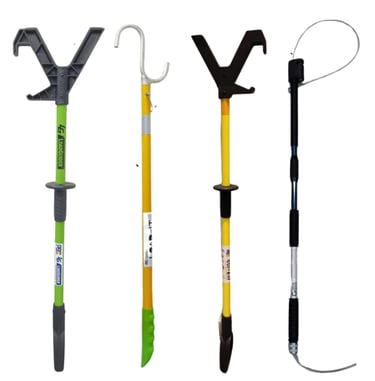
PSC Push / Pull Tools
Safely guide, push, and position suspended loads from a distance without putting your hands in the line of fire.
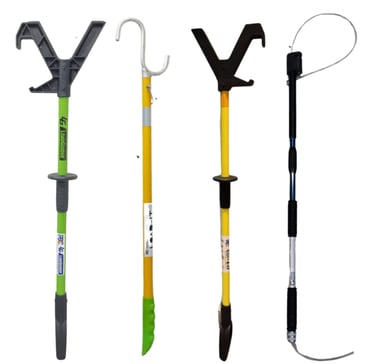
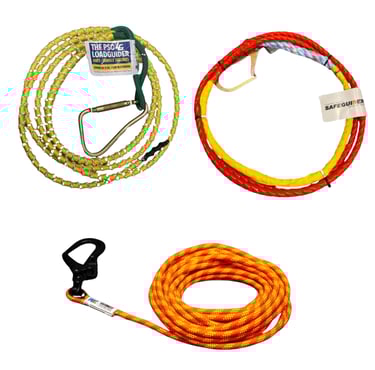
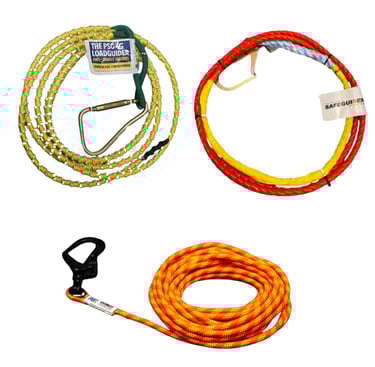
Taglines
Control swing and rotation of suspended loads with tangle‑resistant taglines that keep you clear of the fall zone.
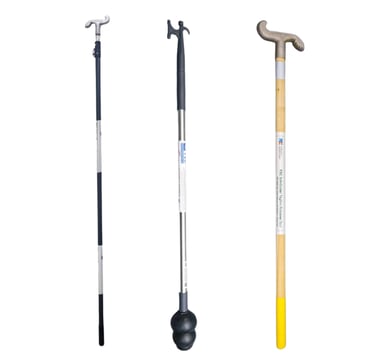
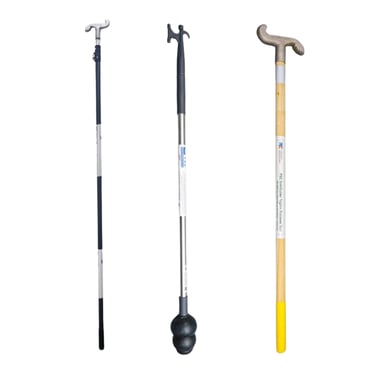
Retrieve and manage taglines from a safe perimeter so you never have to walk under or near a suspended load.
Tagline Retriever Tools
📞+91 9100932334
📧 info@projectsalescorp.com
🌐 pschandsfree.com
Let’s discuss your safety requirements.


Dubai Silicon Oasis, Building A1, IFZA Business Park, DDP, Dubai, United Arab Emirates
(+971) 50-457-2844
info@pscdubai.com
pscdubai.com
3A, 3rd floor, Founta Plaza, Suryabagh, Visakhapatnam-530020, AP, India.
+91 9100932334
info@projectsalescorp.com
pschandsfree.com
134 Vintage Park Blvd, Ste A #1006, Houston, TX 77070
(984) 322-1807
info@pschoustonllc.com
pschoustonllc.com